
What the Housing Court Does
The Housing Court Department is one of the Massachusetts Trial Court departments. It hears housing-related civil disputes: summary process eviction, residential code enforcement, related landlord-tenant claims, and certain housing-discrimination matters. The court is structured by region, with the Eastern Housing Court covering Suffolk and surrounding counties through a Boston session.
The court's design helps tenants and landlords. Housing Court has clerks and resources focused on housing matters, including mediation services and tenant-attorney programs. The Massachusetts Housing Court page is the official department source.
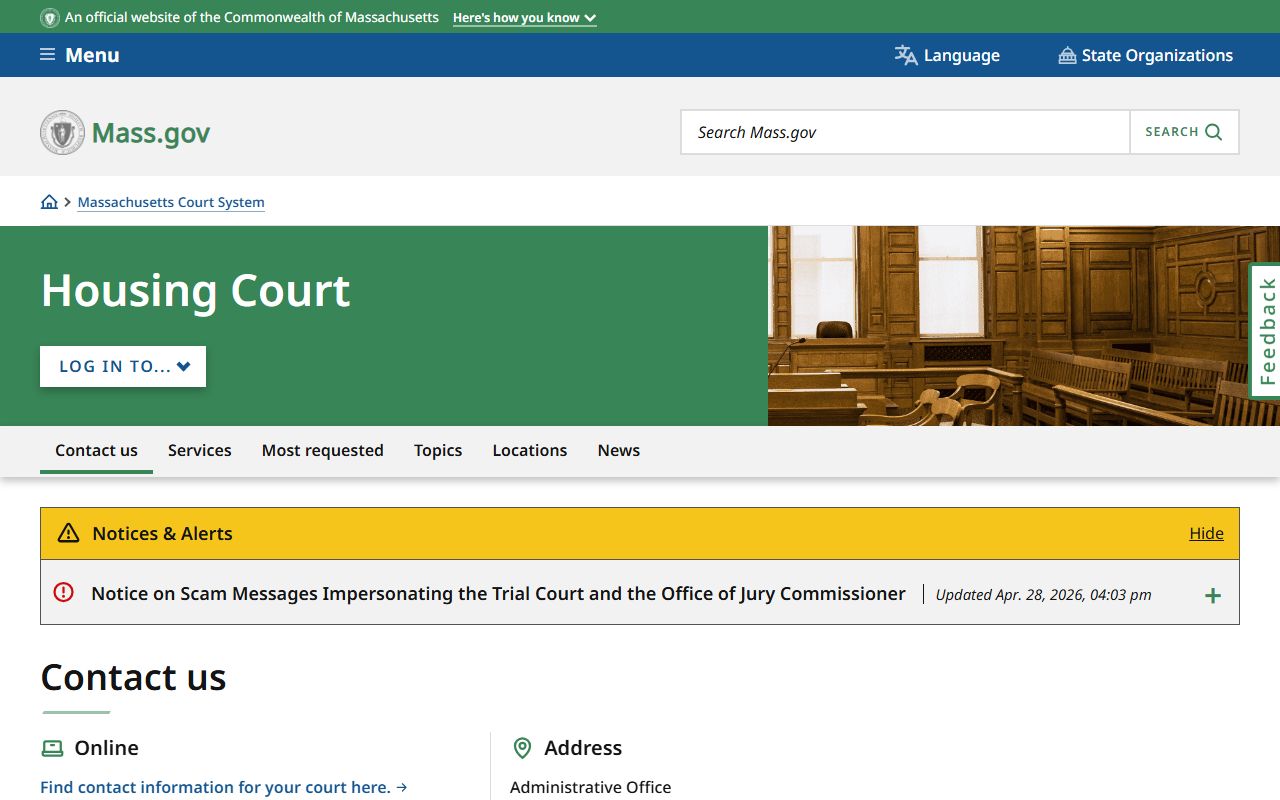
The department page shown above is the right place to confirm session schedules, judges, and contact information for the Boston session that serves Suffolk County.
Types of Suffolk Housing Court Cases
Housing Court takes housing-specific cases. The list below covers the main types a Suffolk County search may return.
- Summary process evictions for nonpayment, no-fault, or fault grounds.
- Code enforcement cases brought by local inspectional services.
- Conditions claims by tenants over uninhabitable conditions.
- Lead paint matters tied to Massachusetts lead law.
- Security deposit and rent-related civil claims within statutory limits.
- Housing discrimination claims under fair housing law.
Some Suffolk eviction matters can also appear in Boston Municipal Court or Chelsea District Court depending on where they were filed.
Summary Process in Suffolk County
Summary process is the Massachusetts eviction procedure. It is faster than ordinary civil litigation and follows a strict timetable. A landlord starts with a notice to quit, then files a summary process complaint with the court. The tenant must answer by a set day, and a trial date follows soon after. Housing Court hears many of these cases in Suffolk, and Boston Municipal Court hears others.
Tenants have rights at every stage: notice, defenses, counterclaims, discovery, mediation, and appeal. Landlords have rights too, including damages and possession when a tenant breaches the lease. Both sides should read the notice and the complaint carefully, then act on the deadlines. The Boston Court Service Center can help self-represented parties with forms.
Searching Suffolk Housing Court Records
Housing Court dockets are searched through MassCourts public eAccess. Pick the Housing Court department and the Eastern Housing Court division, then search by case number or party name. A complete eviction search may need both Housing Court and BMC, because a tenant or landlord can have files in both.
- Open MassCourts and pick the Housing Court department.
- Select the Eastern Housing Court division.
- Search by case number, or by tenant or landlord name.
- Open the result row to read the docket.
- Call the Housing Court clerk for certified copies.
For broader court-search guidance, see Suffolk County court records. Older Housing Court files may sit offline and require clerk assistance to pull.
Mediation and Settlement
Housing Court uses mediation more than many other Trial Court departments. Mediation gives the parties a chance to settle before trial, often with help from a neutral mediator. Settlements may include payment plans, time to move, repairs, or stipulated judgments. Mediation is not required, but it is a common Housing Court path.
Tenants facing eviction can also seek emergency rental assistance and other aid through state programs that often work alongside Housing Court mediation. Legal aid organizations help low-income tenants navigate both pieces, and many cases settle once an assistance application is pending.
Code Enforcement and Conditions
Code enforcement cases come from local inspectional services or from tenant complaints. The Boston Inspectional Services Department is the most common source for Boston code cases; Chelsea, Revere, and Winthrop each have their own inspectional teams. The court can order repairs, fines, and other remedies for code violations.
Tenants can bring their own conditions claims when a landlord fails to repair. Lead paint cases are a separate statutory track and require careful pleading. A tenant or landlord planning a conditions case should consult counsel or a legal aid program before filing. The court can order specific repairs by a deadline, rent withholding remedies, and money damages depending on the proof.
Appeals from Housing Court
Appeals from Housing Court generally go to the Massachusetts Appeals Court. Some Housing Court appeals route through the Appellate Division before reaching the Appeals Court, depending on the issue. Strict deadlines apply, and the court file must be assembled within the time limits.
Tenants facing an execution for possession after a judgment can sometimes ask the Housing Court for relief, including a stay, depending on the circumstances. Counsel matters here because the rules are technical, and a missed step can foreclose later relief. Landlords seeking to enforce an execution should also follow the strict notice and execution rules to avoid wrongful-eviction exposure.
Tenant and Landlord Resources
Several resources help Suffolk tenants and landlords through Housing Court. Greater Boston Legal Services provides civil legal aid to low-income tenants. The Volunteer Lawyers Project runs pro bono clinics for qualifying tenants and landlords. The Massachusetts Legal Resource Finder is a statewide screening and referral tool. The Boston Court Service Center helps self-represented parties understand forms and procedure.
State rental assistance programs work alongside court cases. Tenants behind on rent can sometimes pause an eviction long enough to apply for assistance, with the court's permission. Landlords benefit when assistance pays unpaid rent, so both sides have reasons to use these tools.
Housing Cases in Other Departments
Housing Court is not the only court that hears housing matters in Suffolk County. Boston Municipal Court hears some summary process cases and other civil claims tied to housing. Superior Court hears larger housing-related civil disputes, including some complex claims about title or money damages above lower-court limits. Land Court takes some housing-related matters tied to title and zoning.
A full housing-records search may need more than one department. The Boston Municipal Court, Superior Court, and Land Court pages cover the other tracks.
Certified Housing Court Copies
Certified copies of Housing Court judgments, orders, and executions come from the Housing Court clerk for the session that handled the case. To order, give the case number, party names, filing year, and the specific document you need.
Fees follow the Trial Court schedule. Indigency waivers may apply. The clerk's official record controls over any online docket, and certified copies are the right document for any legal use of a Suffolk Housing Court file.
Note: A summary process record can affect future tenant applications and screening, so confirm the docket and disposition with the clerk before relying on it for any rental decision.