
The Suffolk County Registry of Deeds
The Suffolk County Registry of Deeds is at 24 New Chardon Street in Boston, sharing a building with Probate and Family Court. The registry records land instruments for the four Suffolk municipalities and keeps the official index that surveyors, attorneys, and title insurers rely on. The official site is suffolkdeeds.com, and the statewide land-record portal is masslandrecords.com.
Land records are not court case files. A deed is not a court order. A mortgage discharge is not a judgment. The Registry of Deeds maintains the recording and indexing system; the courts handle civil disputes that may end with a judgment touching land. The Land Court page covers court matters that affect title. For broader public-records process, see public records.
What Is Recorded in Suffolk County
The registry records the documents that move, encumber, or describe real property. Common categories appear below. Each is indexed by party name, date, document type, and book and page, which is the historical reference still used today.
- Deeds - transfers of real property between parties.
- Mortgages - loans secured by real property.
- Discharges and releases - documents that clear a mortgage or other lien.
- Liens - tax, judgment, mechanic's, and other claims against property.
- Homestead declarations - statutory protection for a primary residence.
- Plans - recorded property plans showing boundaries and easements.
- Powers of attorney - recorded authority tied to real estate transactions.
Each instrument carries a recording date and book-and-page reference. Older records may have been re-indexed multiple times. Boston's recording history is long, so older books may exist in physical archives alongside the digital index, with staff assistance needed to pull pre-digital documents.
Searching MassLandRecords for Suffolk
The MassLandRecords portal supports name, book and page, document number, and property searches for Suffolk County. Free index search is available, and document images can usually be viewed for recorded land records. Start at masslandrecords.com and select Suffolk County from the registry dropdown.
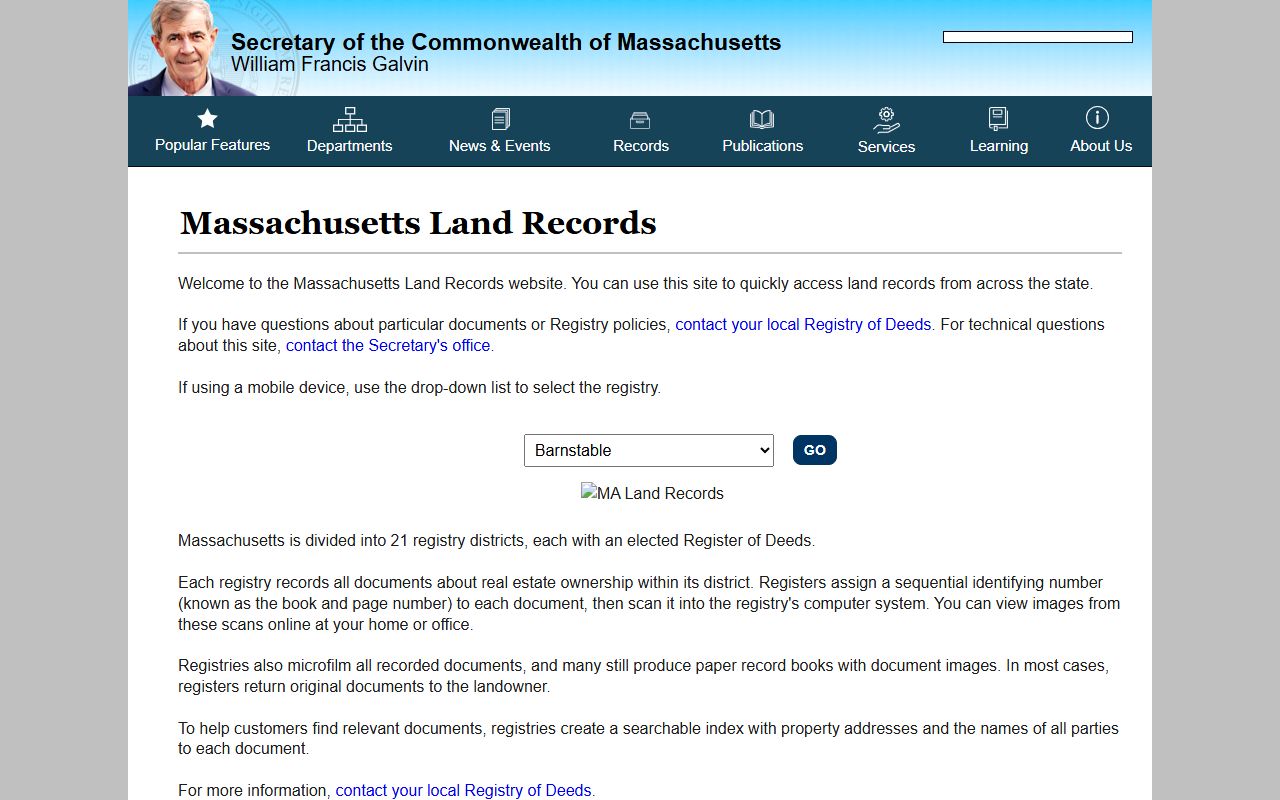
The portal pictured above is the same tool every Massachusetts registry of deeds uses, so a Suffolk search runs through the same interface as searches in other counties.
| Field | Type | Required | Notes |
|---|---|---|---|
| Registry | dropdown | Yes | Select Suffolk County. |
| Search Criteria | tab | Yes | Name, Book/Page, Document Number, Property, Recorded Date, or Plan. |
| Name | text | Conditional | Grantor, grantee, or party; try with and without punctuation. |
| Book / Page | text | Conditional | Used together for recorded document retrieval. |
| Document Number | text | Conditional | Direct instrument lookup. |
| Street Number / Name / City | text | Optional | Property-address searching where indexed. |
| Date Range | date | Optional | Recording date range. |
| Document Type | dropdown | Optional | Deed, mortgage, discharge, lien, plan, or other instrument. |
Name searches work best when the legal name is exact. Business names should be tested with and without punctuation, because indexing varies.
How to Search Suffolk Land Records
The right search path depends on what you know. A book-and-page search is the fastest if you have the reference. A document number works if you have it. A name search is the usual starting point when you do not.
- Open MassLandRecords and pick Suffolk County.
- Choose Name, Book/Page, Document Number, or Property Search.
- Enter the criteria; for a name search, try last name first.
- Open the result row to view the recording detail.
- View or download the document image if available.
- For certified copies, contact the registry by phone or in person.
If a property has changed hands many times, use a date range to narrow the index. The portal lets you toggle between index results and image views; some pages require scrolling through several pages to find the right document.
Why the Suffolk Registry Covers Only Four Cities
Suffolk County is small in land area. It contains only Boston, Chelsea, Revere, and Winthrop. So the Suffolk Registry of Deeds covers a smaller footprint than many county registries elsewhere in Massachusetts. A reader who expects "Suffolk County" to be larger may be surprised that other nearby municipalities, like Brookline or Quincy, are not in Suffolk and not in the Suffolk registry's index.
That matters for property searches. A property that feels "right next to Boston" may sit in a different county and a different registry. When in doubt, confirm the municipality before running a registry name or property search. The wrong registry returns nothing even when the property exists.
Common Suffolk Registry Searches
A few searches make up most of the registry's daily volume. Knowing what each one looks like saves time at the index.
- Buyer or seller name in a recent sale to find the deed and mortgage.
- Mortgage discharge by book and page from a payoff statement.
- Lien check by current owner name for tax, judgment, or contractor liens.
- Homestead declaration by homeowner name to confirm filing.
- Plan reference by book and page for boundary or easement detail.
Title attorneys often combine several of these into a full search before a sale or refinance. A buyer's lender usually orders a title search too, and the registry index is the primary input.
Registry Fees and Certified Copies
The registry charges for copies, certified copies, and recording. Specific fees are published on the official registry site and change from time to time. Confirm current fees before ordering. The table summarizes categories without inventing dollar amounts.
| Item | Fee Note |
|---|---|
| Plain copy | Per-page rate set by the registry. |
| Certified copy | Per-page rate plus a certification fee. |
| Recording fee | Set by statute and registry schedule, varies by document type. |
| Excise tax | Set by state law for deed recording on sales. |
Online image viewing is generally free; certified copies require contact with the registry.
What the Registry Does Not Handle
The registry's lane is land records. Several common requests do not belong here. Divorce decrees and probate files go to the Probate and Family Court. Criminal cases go to court records. Boston marriage records sit with the Boston Registry Division, covered on the marriage and divorce records page. RMV records, jail custody, and federal cases all live in their own systems.
Sending the wrong request to the registry leads to a polite redirect. Matching the document to the office before sending saves the trip.
Title Issues and Court Filings
Disputes about ownership, boundaries, registered land, tax liens, and zoning are court matters, not registry matters. Land Court has statewide jurisdiction over registered land, title disputes, tax lien foreclosure, and zoning or permit appeals. A civil suit over a sale or boundary can also appear in Superior Court depending on the claim.
The Land Court page covers these court filings. For larger civil disputes that involve property, the Superior Court page is the right starting point.
Note: A recorded deed is not a guarantee of clear title; a title search by an attorney or title insurer remains the right step before relying on registry data for a purchase or loan.