
Suffolk Probate and Family Court
Suffolk Probate and Family Court handles all probate matters for the county. The Boston office is at 24 New Chardon Street, with a satellite at 120 Broadway in Chelsea. The Boston office is open Monday through Friday, 8:30 a.m. to 4:30 p.m.; the Chelsea office runs shorter hours, Tuesday through Thursday. The court phone is 617-788-8350; fax 617-788-8962.
The governing statute is the Massachusetts Uniform Probate Code at M.G.L. c. 190B. It covers estates, wills, personal representatives, guardianships, conservatorships, and probate procedure. Family-court matters such as divorce share the same courthouse; see marriage and divorce records for those.
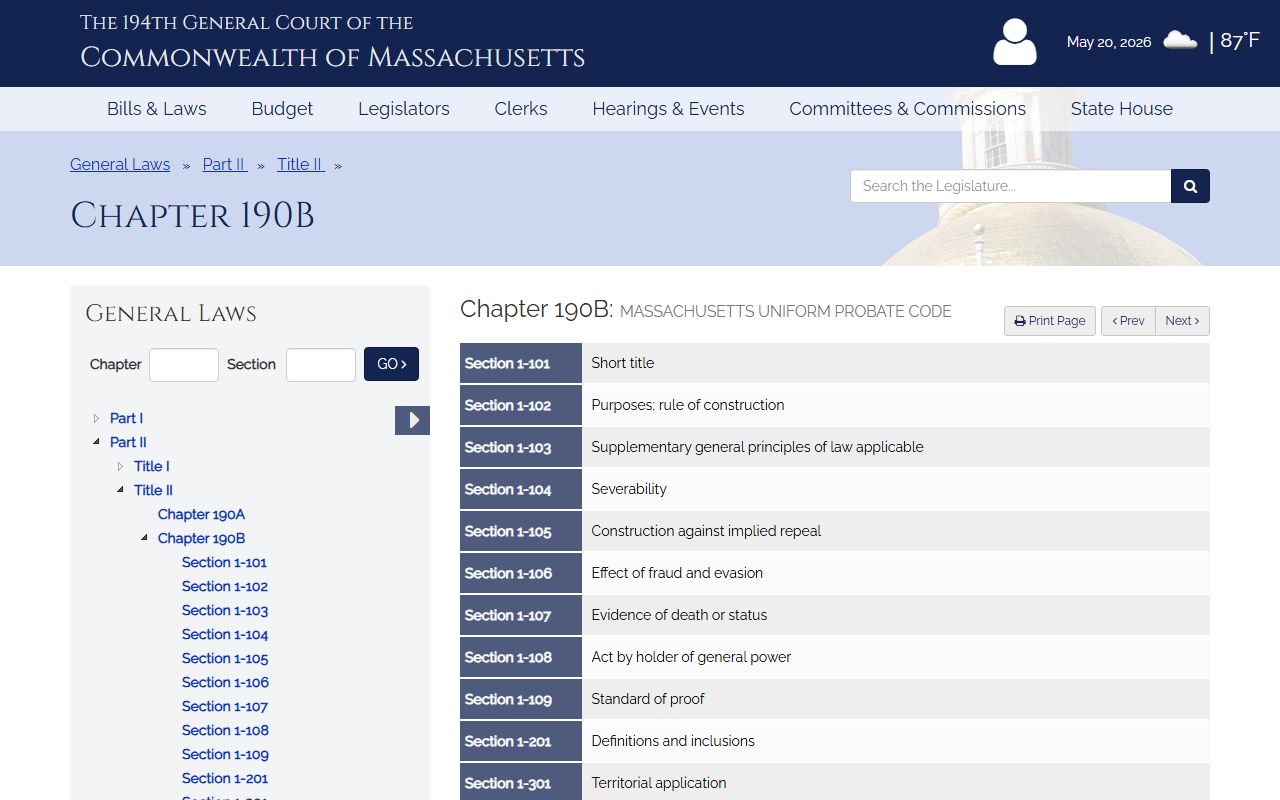
The Uniform Probate Code shown above is the modern framework for Suffolk County probate, replacing older procedures with one consistent set of rules.
Suffolk Probate Court Contact
Two locations serve Suffolk's probate matters. The Boston office handles most filings; the Chelsea office serves people who live closer to Chelsea, Revere, or Winthrop. Confirm hours before traveling, especially for the Chelsea satellite.
Search Suffolk County Probate Dockets
Probate dockets can be searched through MassCourts public eAccess where the case category allows it. Pick the Probate and Family Court department and the Suffolk division, then search by name or case number. Older probate files, impounded matters, guardianship medical materials, and adoption files may require direct registry contact or may be restricted from public view.
| Field | Type | Required | Notes |
|---|---|---|---|
| Department | dropdown | Yes | Probate and Family Court. |
| Division | dropdown | Yes | Suffolk Probate and Family Court. |
| Case Type | dropdown | Optional | Estate, guardianship, conservatorship, trust, equity, family. |
| Name | text | Conditional | Decedent, petitioner, ward, fiduciary, or interested party. |
| Case Number | text | Conditional | Probate docket number. |
| Date Range | date | Optional | Filing or event date. |
Start at the MassCourts public eAccess portal to run a probate name search.
Estates, Wills, and Personal Representatives
Probate covers what happens to a person's property and affairs after death. An estate may move through voluntary administration for small estates, informal probate when the case is straightforward, or formal probate when the situation is contested or complex. The original will, if any, is filed with the court along with death information and a list of heirs or devisees.
The court appoints a personal representative, formerly called an executor or administrator, who gathers assets, gives creditors notice, files an inventory and accounts where required, pays debts and taxes, and distributes property. The court records page covers Probate dockets alongside other Trial Court files.
Guardianships and Conservatorships
Guardianship and conservatorship are different from estate administration. They are not about a person who has died; they are about a living minor or an adult who cannot manage their affairs. A guardian makes personal and care decisions for a ward. A conservator manages the finances of a protected person who cannot manage them alone.
These cases include medical evidence, clinical reports, and protected-person financial data, much of which is not public. Treatment plans and Rogers orders carry extra confidentiality. A search may show a docket while keeping the underlying medical material out of public view.
Family members often start a guardianship or conservatorship because of a sudden medical event. Court forms include medical certificates and notice requirements, and a person served with notice has the right to be heard. The Boston Court Service Center can help self-represented petitioners with forms and procedure.
How Probate Works in Suffolk County
The routine estate path runs through these steps. A contested case can add hearings and notices, but the structure is the same.
- Determine whether the estate qualifies for voluntary administration, informal, or formal probate.
- File the correct petition or application with Suffolk Probate and Family Court.
- Submit the original will, if one exists, with death information.
- List heirs or devisees and their addresses.
- Provide assents or request citation or notice.
- Court appoints the personal representative if requirements are met.
- Personal representative collects assets and gives creditor notice.
- File inventory and account if required, pay debts and taxes, distribute property.
Common delays include a missing original will, unknown heirs, a contested fiduciary, a will contest, a creditor dispute, or a real estate title issue.
What a Suffolk Probate Docket Shows
A probate docket reads differently from a criminal or civil one. Many entries track citation, bond, inventory, and accounts. The fields below appear most often when you open a Suffolk probate case detail.
- Docket number and decedent or protected-person name.
- Case type: informal probate, formal probate, guardianship, conservatorship.
- Petitioner, personal representative, guardian, or conservator.
- Interested parties and attorney of record.
- Citation or notice entries.
- Bond, will allowance, inventory, and account events.
- Decree, order, or judgment when entered.
Restricted items, such as medical certificates, minors' information, protected-person reports, adoption files, and impounded items, do not appear publicly.
Common Probate Terms
Probate uses legal vocabulary that often confuses first-time filers. The definitions below cover the words used most often in Suffolk probate cases.
- Testator
- The person who made a will.
- Executor or personal representative
- The person who carries out a will and administers the estate.
- Intestate
- Dying without a valid will, which sends property by statute to heirs.
- Fiduciary
- A personal representative, guardian, conservator, or trustee with duties to the court and parties.
- Guardianship
- Court authority over the personal and care decisions of a minor or incapacitated adult.
- Conservatorship
- Court authority over the finances of a protected person.
Probate Fees and Certified Copies
Probate fees follow Trial Court schedules and statute. The categories below cover the most common items, without inventing dollar amounts; confirm the current fee with the register before ordering. Fee waivers are available for indigent filers through an affidavit of indigency.
| Item | Fee Note |
|---|---|
| Filing fee | Set by Trial Court schedule; varies by case type. |
| Certified copy | Per-page rate set by the register; confirm before ordering. |
| Bond and surety | Required for some fiduciary appointments. |
| License to sell real estate | Required for certain estate sales of real property. |
To order a copy, give the register the decedent's name, date of death, docket number if known, and the specific document you need, such as the will, the decree of appointment, the letters, an inventory, or an account.
A common probate request script reads: "I need a certified copy from a Suffolk Probate and Family Court estate. The decedent was [name], date of death [year]. The docket number is [number]. Please confirm the fee for a certified copy of the will, the decree, and the inventory." A clear, specific request is filled faster than a broad ask.
Note: A clerk's official record controls over an online docket summary; confirm any probate detail with the Suffolk Probate register before relying on it.