
Suffolk County Superior Court Overview
The Superior Court is the trial court of general jurisdiction in Massachusetts. In Suffolk County it handles first-degree murder, felony criminal cases, civil actions with larger claims, equitable relief, and medical malpractice tribunals. Cases that exceed the limits of the lower courts land here. The Suffolk session sits in downtown Boston and serves the four municipalities that make up the county.
The Superior Court is one department inside a unified Massachusetts Trial Court. It does not stand alone as a "county court." Other departments hear other matters: lower-level crime and small claims go to Boston Municipal Court and the District Court; divorce and estates go to Probate and Family Court. The Massachusetts Superior Court department page explains the court's statewide role and how its sessions are organized.
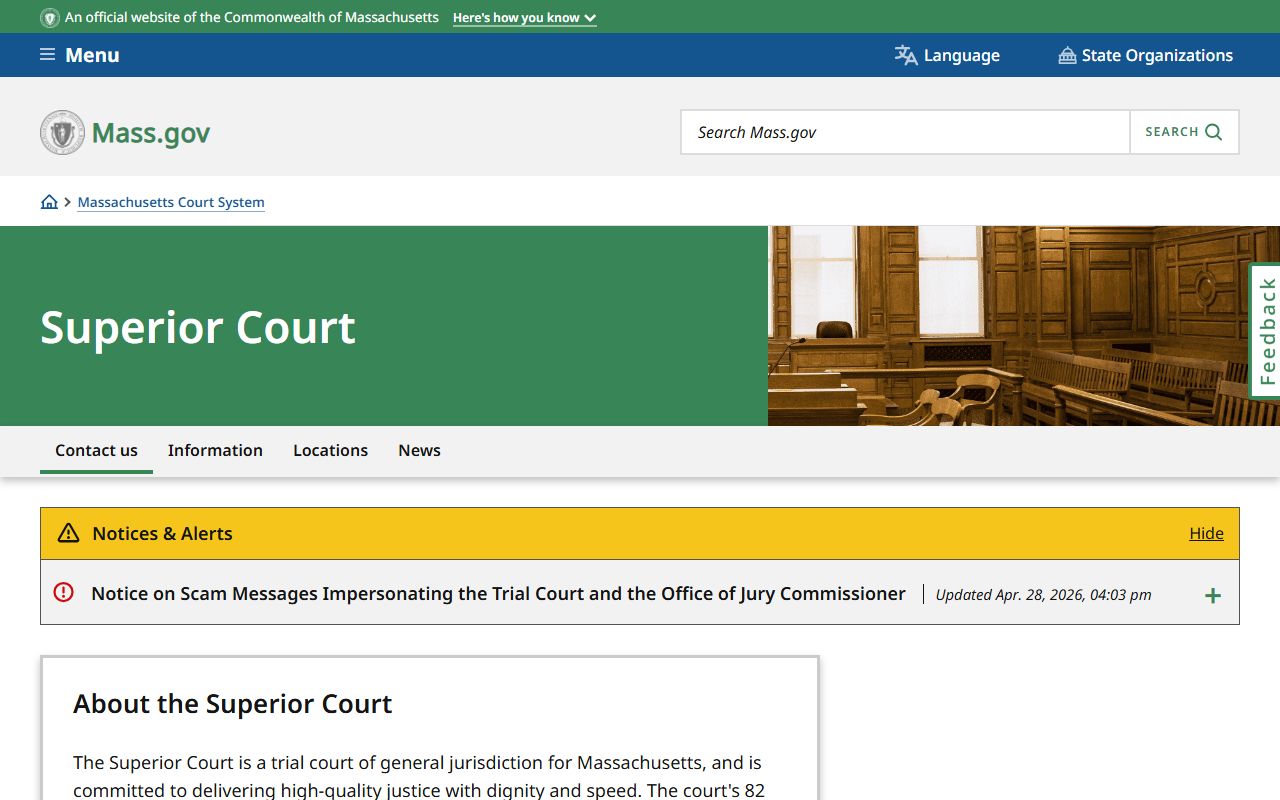
The department page above is the authoritative source for what the Superior Court can hear, which keeps you from filing or searching in the wrong court.
Suffolk Superior Court has both civil and criminal sides, and the clerk's office is divided to match. A felony case moves here after a grand jury returns an indictment. A civil case can be filed here directly when the claim is large enough or seeks equitable relief. The court shares the Government Center area with the appellate courts, the Brooke Courthouse, and the Probate and Family Court, so the county's main court work is concentrated in a few downtown blocks.
Suffolk County Trial Court Locations
Massachusetts does not number its trial courts the way some states do. Instead, it splits the Trial Court into departments, each with its own Suffolk location. The table lists the main court buildings and offices that serve the county, with the Superior Court at the head.
| Court / Department | Main Role | Address | Phone |
|---|---|---|---|
| Suffolk County Superior Court | Felony, major civil, equity | 3 Pemberton Square, Boston | 617-788-8110 |
| Suffolk Probate and Family Court | Divorce, estates, guardianship | 24 New Chardon St., Boston | 617-788-8350 |
| Chelsea District Court | Chelsea/Revere District Court matters | 120 Broadway, Chelsea | See mass.gov location |
| Boston Municipal Court | Boston criminal, civil, small claims | Multiple Boston divisions | See mass.gov BMC page |
The Brooke Courthouse at 24 New Chardon Street is a major Boston Municipal Court site, while Housing Court and Land Court use other Boston Trial Court locations. Use the specific court's location page before any visit.
How to Search Suffolk Superior Court Cases
Suffolk Superior Court cases are searched through MassCourts eAccess, the Trial Court's free public portal. The portal is statewide, so you must pick the Superior Court department and the Suffolk division before you search. A name search works when you do not have a docket number. A case-number search is faster when you do. The portal shows docket information, but most pleadings and orders still need a clerk request.
Use the steps below to keep a Superior Court search on track.
- Open MassCourts eAccess and choose the Superior Court department.
- Select Suffolk County Superior Court as the division.
- Search by party name, or enter the indictment or civil docket number.
- Open the result to read the docket, parties, and disposition.
- Call the civil or criminal clerk unit for certified copies.
The full portal walkthrough, with the search-field table, lives on the Suffolk County court records page.
Superior Court vs. BMC vs. District Court
The split between Superior Court and the lower courts comes down to how serious the matter is. Superior Court takes the heaviest criminal and civil cases. Boston Municipal Court and the District Court take misdemeanors, smaller civil claims, and traffic. Knowing the line helps you find a record in the right department.
| Superior Court | Boston Municipal Court | District Court | |
|---|---|---|---|
| Criminal Reach | Felonies, murder | Misdemeanors, lesser felonies | Misdemeanors, prelim. felony |
| Civil Claims | Larger claims, equity | Lower-dollar civil | Lower-dollar civil |
| Small Claims | No | Yes | Yes |
| Service Area | All of Suffolk | Boston neighborhoods | Chelsea/Revere area |
For the lower courts in detail, see the Boston Municipal Court page. Housing and real estate matters have their own departments at Housing Court and Land Court.
How a Suffolk County Case Moves Through the System
A criminal case can start in a lower court and move up to Superior Court for indictment and trial. A civil case filed in Superior Court runs its own track from complaint to judgment. Appeals leave the Trial Court and go to the appellate courts.
Criminal flow: Arrest › Arraignment in BMC/District Court › Grand Jury Indictment › Superior Court Arraignment › Pretrial › Trial › Sentencing › Appeals Court
Civil flow: Complaint Filed › Answer › Discovery › Motions › Trial › Judgment › Appeals Court › Supreme Judicial Court
Appeals From Suffolk Superior Court
Most appeals from Suffolk Superior Court go to the Massachusetts Appeals Court, the state's intermediate appellate court. Some matters go straight to the Supreme Judicial Court when a statute or rule directs it. The John Adams Courthouse near Pemberton Square houses both appellate courts, which keeps Suffolk's appellate work close to its trial work.
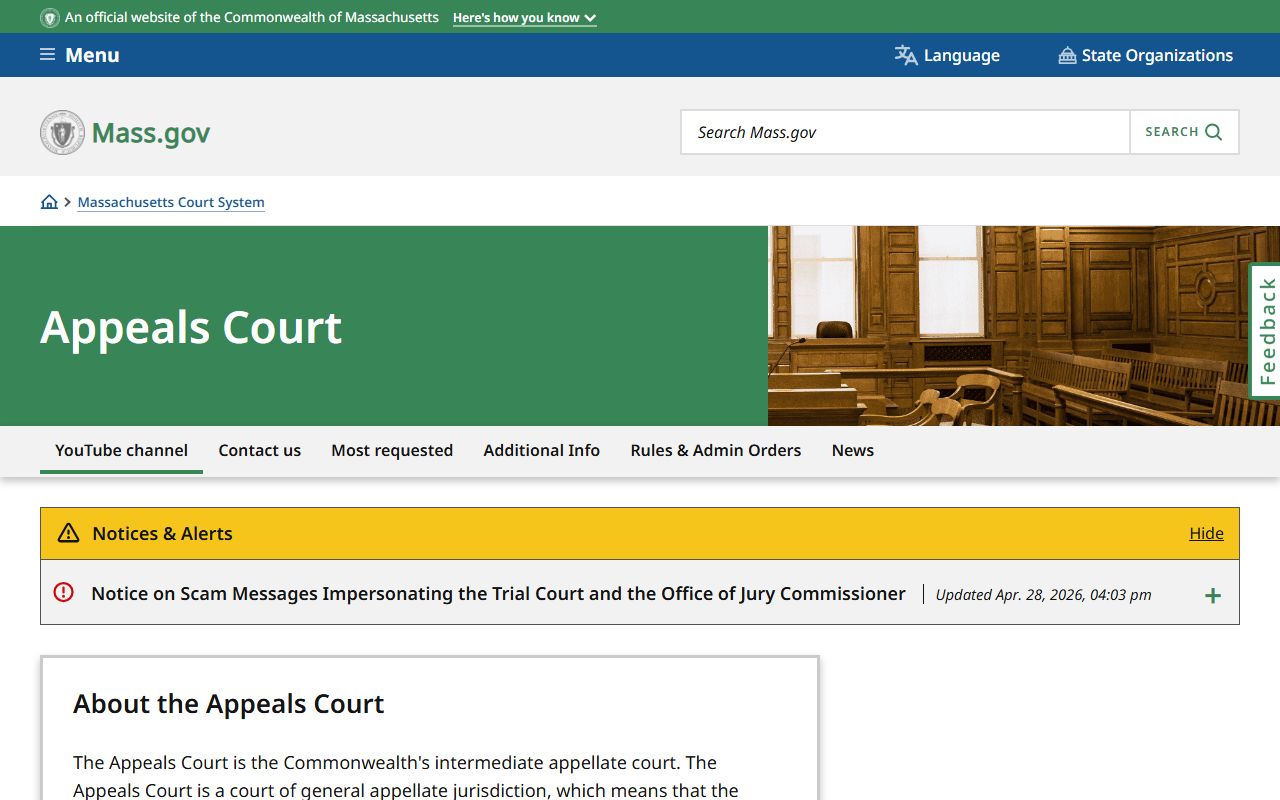
The Massachusetts Appeals Court page, shown here, covers how to file and track an appeal. Appellate records are kept by the appellate clerk, not the Superior Court clerk.
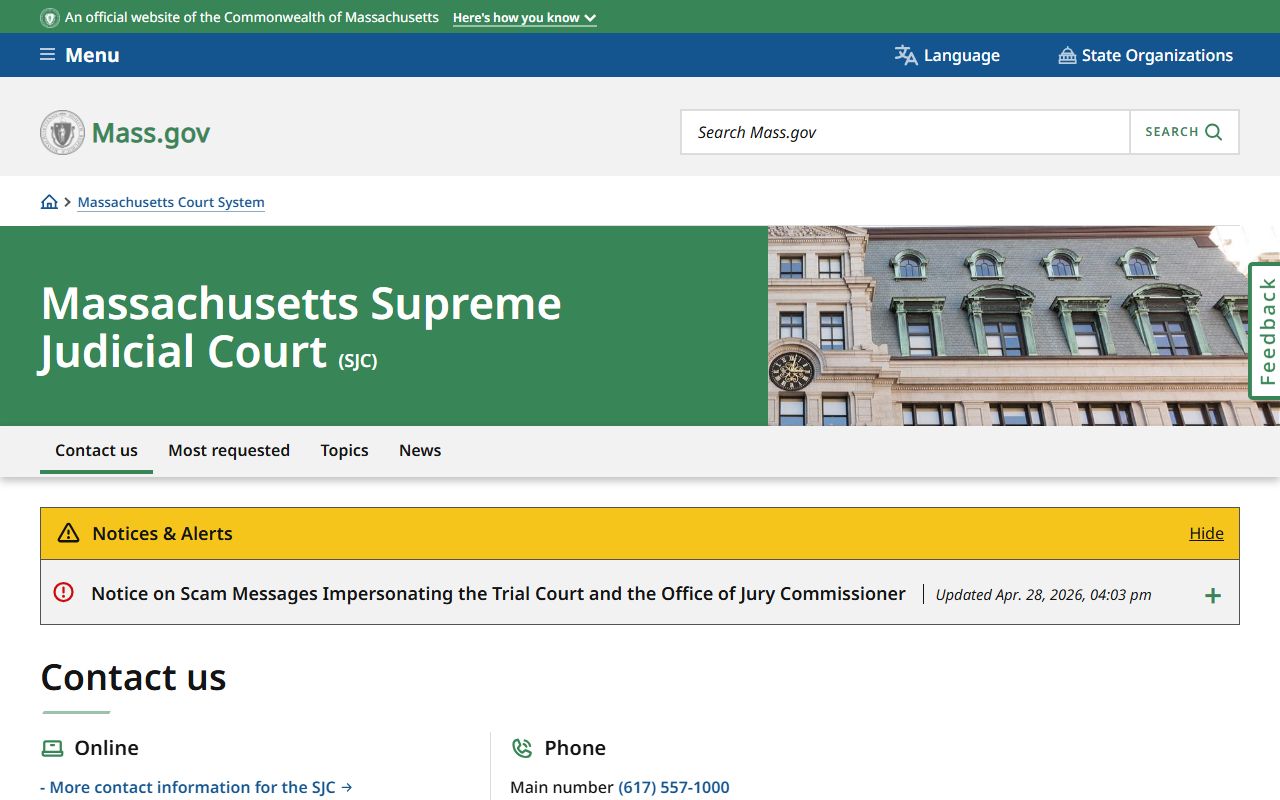
The Supreme Judicial Court page above is the state's highest court and the final step for the few Suffolk Superior Court matters that bypass the Appeals Court or move further on review.
Civil, Criminal, and Equity Sessions
Suffolk Superior Court runs separate sessions for its main work. The criminal sessions handle felony arraignments, motions, pleas, and trials. The civil sessions handle large damage claims, contract disputes, and tort cases. Equity sessions handle injunctions and other relief that money alone cannot fix. The clerk's office is split into civil and criminal units, so a caller should ask for the right unit.
Business and complex civil cases may be routed to specialized sessions for closer case management. A litigant unsure which session holds a file should call the Superior Court clerk at the number above and give the docket number if known.
Jury trials in Suffolk Superior Court draw jurors from across the county. Most serious felony trials and large civil disputes are decided here rather than in the lower courts. Because Boston is the state capital, some of the state's highest-profile criminal trials and complex civil litigation have run through this court. That history is part of why the Pemberton Square building stays busy through the year.
Records the Suffolk Superior Court Keeps
Superior Court files run deep. A criminal file may hold the indictment, docket sheet, arraignment entries, bail orders, motions, plea tenders, probation terms, the sentence, and the final disposition. A civil file may hold the complaint, answer, motions, affidavits, exhibits, discovery disputes, orders, the judgment, and any execution to enforce it. Equity files add injunctions and other court orders.
Public access to these files is broad but not total. CORI law, sealing statutes, juvenile confidentiality, and impoundment orders pull some material out of view. A few common terms help when reading a Superior Court docket.
- Indictment
- A formal felony charge returned by a grand jury, the usual start of a Superior Court criminal case.
- Disposition
- The current or final outcome of a charge or case.
- Execution
- The court process used to enforce a civil money judgment.
- Impounded
- A court restriction that limits public access to some or all of a file.
Lower Courts Serving Suffolk County
Below Superior Court, several departments carry the day-to-day caseload. Boston Municipal Court divisions handle Boston criminal, civil, small claims, summary process, and traffic-criminal sessions. Chelsea District Court serves District Court matters for the Chelsea and Revere area. Juvenile Court handles delinquency and child-welfare matters under strict confidentiality.
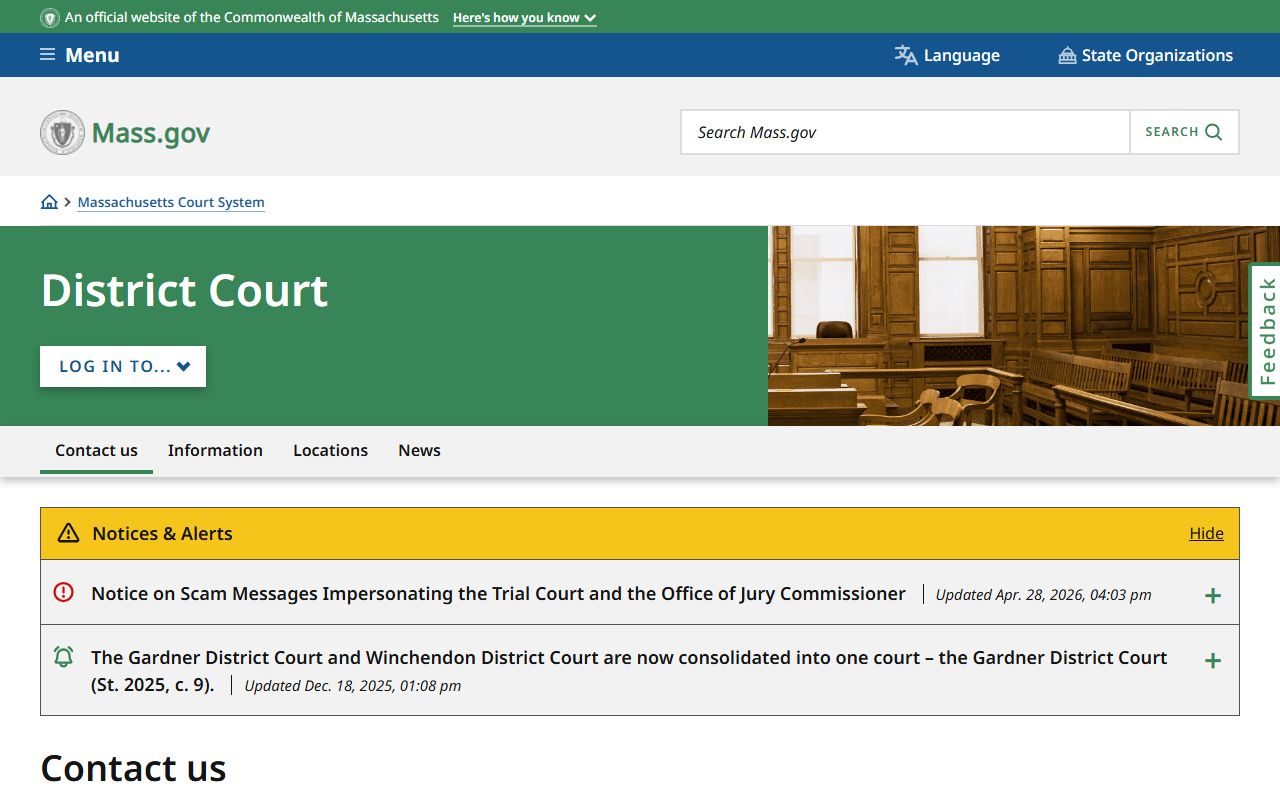
The District Court Department page above outlines what these courts hear. Many records people want, like small claims and evictions, live in these lower courts rather than Superior Court.