
How to Verify a Suffolk County Release
A release from Suffolk County can happen in many ways: release on recognizance, release after bail, release after dismissal, release after a sentence, release to probation, release to parole, transfer to state custody, transfer to federal custody, or transfer to a hospital or treatment program. So the first job is to figure out which type of release happened, because that controls where the verification lives.
Use these steps to confirm a release in Suffolk County. Always verify through more than one official source when timing matters.
- Check VINELink Massachusetts for current custody and release events.
- Call the holding facility to confirm status before traveling.
- Check the court docket for a bail, release, or commitment order.
- If transfer is possible, search the Massachusetts DOC and BOP locators.
- Confirm next court date before assuming the case is over.
For the broader custody picture and how to find a person while still in jail, see Suffolk County inmate records.
Setting Up VINELink Release Notifications
VINELink Massachusetts is the state's free custody-notification system. A person can search a name now and register to receive a phone, email, or text alert when the custody status changes. That alert covers release, transfer, and other custody events at participating facilities. It is the closest thing the public has to an automatic released-inmate alert for Suffolk County.
Start at the VINELink Massachusetts portal. Pick Massachusetts as the state, search by last name, and follow the notification sign-up to create a PIN. Keep the PIN safe; the system uses it to confirm the recipient when alerts go out. Notifications are useful for victims and families, but they should not replace direct facility contact when timing is critical.
State Released Inmates: Massachusetts DOC
If a person was sentenced to state prison rather than county jail, releases run through the Massachusetts Department of Correction. The DOC locator searches by name or commitment number and shows state-prison custody, not county jail status. The state's find an inmate in a Massachusetts prison guide explains the search process.
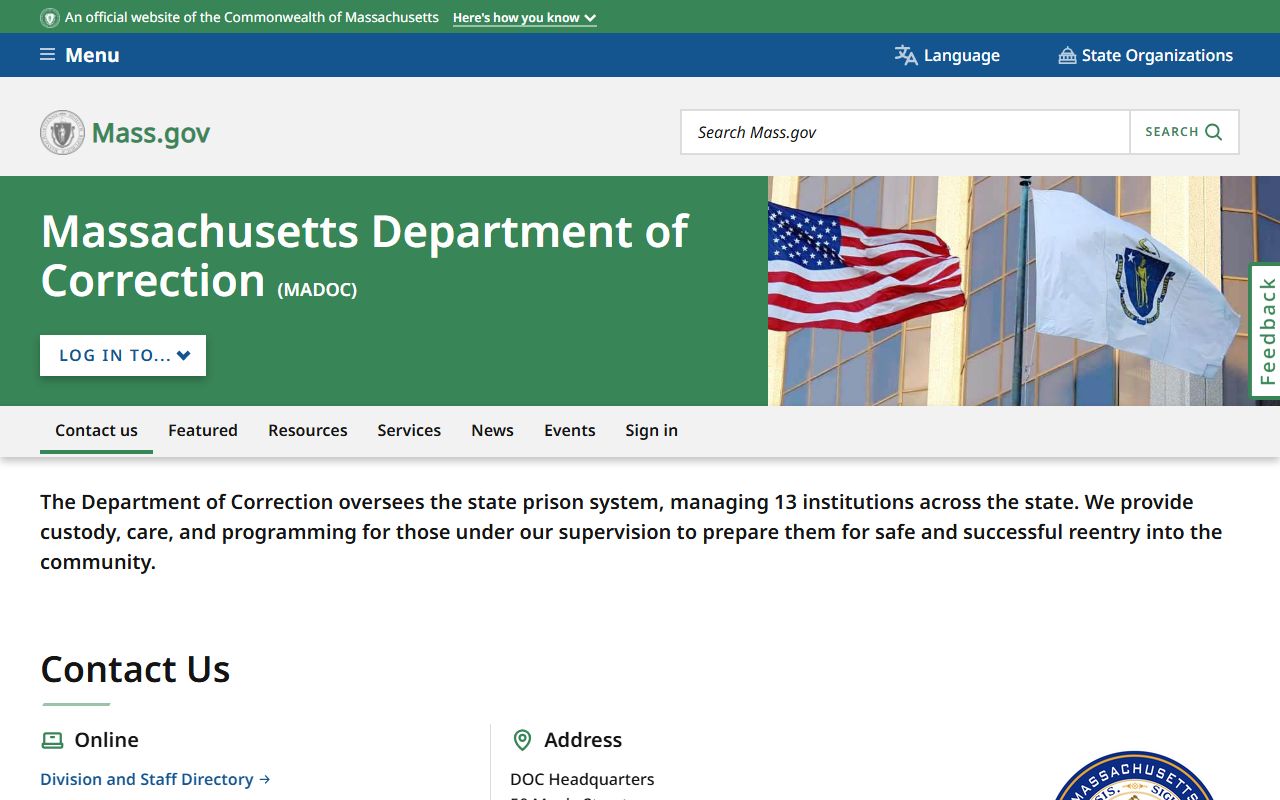
The Massachusetts Department of Correction page pictured above is the official source for state-prison custody, release planning, and parole-related information.
| Field | Type | Required | Notes |
|---|---|---|---|
| First Name | text | Optional | State prison search. |
| Last Name | text | Required for name search | Exact spelling recommended. |
| Commitment Number / Inmate ID | text | Conditional | Direct lookup if known. |
| Buttons | buttons | n/a | Search, Clear/Reset. |
Massachusetts DOC custody is separate from the Sheriff's county jail. A person can be released from county custody and committed to state prison the same day, which can confuse a single-source search.
Federal Released Inmates: BOP Locator
Federal sentenced inmates from Suffolk County cases are searched through the Bureau of Prisons locator. The BOP locator shows federal custody and release events for federally sentenced people. It does not cover county jail or state prison. Federal pretrial custody may run through the U.S. Marshals and may be housed in contract facilities, which is why federal case systems are the cleaner guide for federal defendants.
| Field | Type | Required | Notes |
|---|---|---|---|
| Find By Number | tab | Conditional | BOP Register, DCDC, FBI, or INS number. |
| Find By Name | tab | Conditional | First, middle, last, race, sex, age. |
| First Name / Last Name | text | Required for name path | Use known legal names. |
| Race / Sex / Age | filters | Optional | Narrow common names. |
| Buttons | buttons | n/a | Search, Reset. |
Use the BOP inmate locator directly. PACER, the federal docket system, can also show release-related events for federal cases when a docket update is available.
Release vs. Transfer in Suffolk County
"Released" is not always what it sounds like. A line that reads "released" in one system may mean the person is now in a different system. A county release to state custody is not a release to the street, and a release to a treatment program is not the end of a court case. Read the event entry carefully, and check more than one source before treating someone as fully released.
VINELink may describe a release or transfer event, but it is not a complete criminal-history source. Court dockets may show bail and release orders, though they do not always update at the same speed as jail processing. When timing matters, call the facility and check the docket together.
The Massachusetts Sex Offender Registry
The Massachusetts Sex Offender Registry Board, known as SORB, is a separate public registry. It is not a custody search. A registry entry shows classification and public information about a registered person, while custody answers a different question. Use the registry for registry questions, and use VINELink or the facility for custody.
The SORB page and the official SORB search guide explain how the registry works and the legal warning that registry data cannot be used to harass anyone.
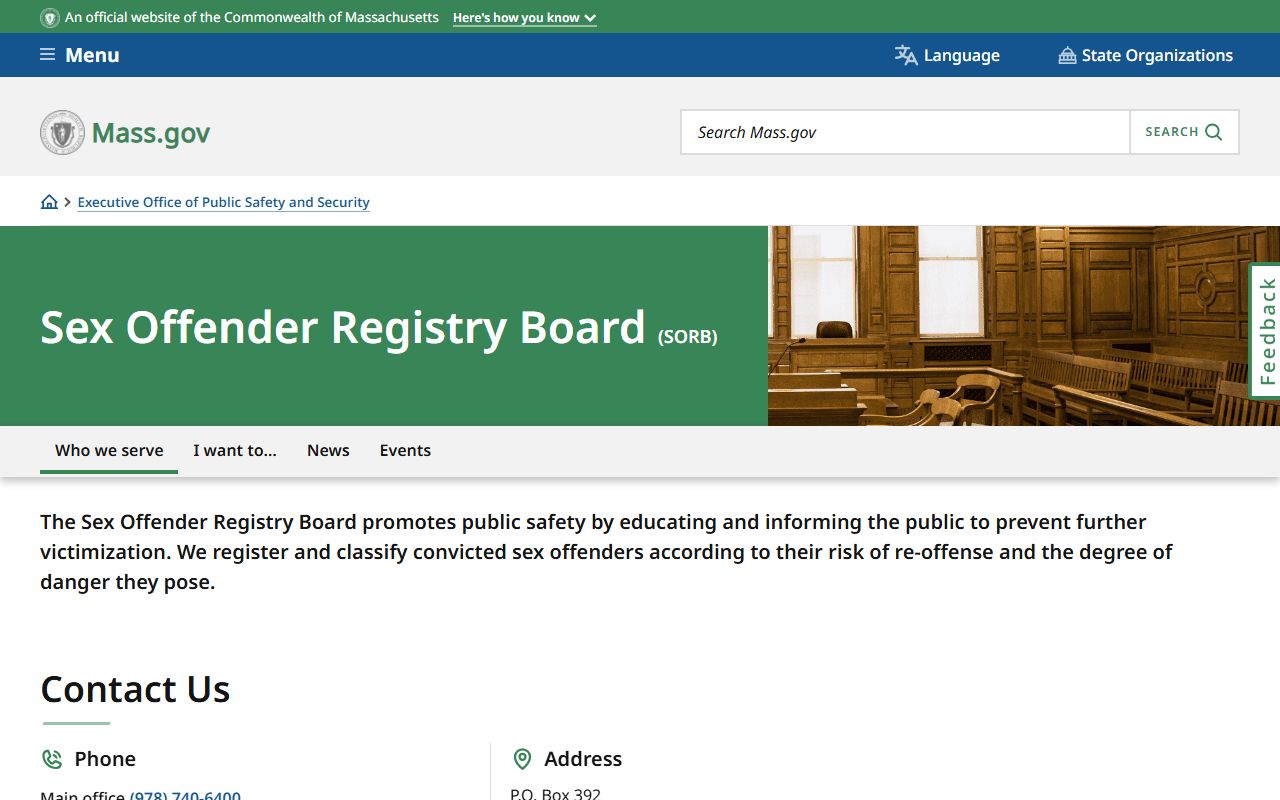
The SORB page shown above is the official source for classification rules, public-search levels, and the legal limits on how registry information may be used in Suffolk County.
| Field | Type | Required | Notes |
|---|---|---|---|
| Search by name | text | Optional | First or last name. |
| Search by city or town | dropdown | Optional | Boston, Chelsea, Revere, Winthrop, etc. |
| ZIP / radius | text | Optional | Radius search if offered. |
| Level | filter | Optional | SORB classification levels where public. |
A SORB result page typically shows name and aliases, classification, registration status, a public address or status, offense description, conviction date, and physical description, with a strong warning against misuse.
Parole, Probation, and Supervision
Many releases come with conditions. Probation supervision attaches to a court case and is handled by Massachusetts Probation Service officers tied to the sentencing court. Parole release from state prison is handled by the Parole Board, which sets release conditions and supervision terms. County jail releases can also include probation conditions, drug testing, or treatment requirements.
Supervision details are not public the same way a docket is. A person seeking accurate parole, probation, or supervision information should contact the responsible office through official channels. The court docket can show the order that created the supervision, even when the day-to-day terms are not online.
Reentry Resources in Suffolk County
Release from custody is the start of a long list of practical tasks. The first hours and weeks are easier when families and the person know what is available. Suffolk County's reentry support is split across state agencies, court resources, and local nonprofits. The list below covers the most common needs.
- MassHire Career Centers for employment, training, and job search.
- Boston Court Service Center for self-help with forms and court procedure.
- Greater Boston Legal Services and the Volunteer Lawyers Project for civil legal aid where eligible.
- Sealing clinics to review CORI eligibility for sealing.
- MassHealth, SNAP, and housing services to restore benefits and identification.
- Community health and substance-use treatment through official state and local directories.
The arrest records page covers sealing and CORI in more depth. Sealing is rarely an immediate priority; first restore documents and stable housing, then plan a sealing review.
Voting Rights After Release
Massachusetts treats voting eligibility by current custody. A citizen incarcerated for a felony conviction cannot vote while incarcerated for that felony. Voting rights return after release from incarceration. Pretrial detainees and people held on misdemeanors should verify eligibility with election officials; they may still be able to vote despite custody.
After release, a person can register to vote like any other resident. The town or city election office handles registration. The FAQ page collects more short answers on records, sealing, and reentry questions.
Next Steps After a Suffolk Release
A few simple steps protect a release from turning into a new court problem. Retrieve personal property according to facility rules. Confirm the next court date before leaving custody, because a missed date can trigger a default and a new warrant, covered on the warrant records page. Update the address with the court, probation, parole, counsel, and any treatment provider.
Ask the facility about medication continuity and discharge paperwork. Reconnect with health care, food assistance, and identification services where eligible. Use legal aid for CORI sealing review later, when stable housing and work are in place. Victims may register with VINELink for ongoing notifications and may also use the Suffolk County District Attorney's victim-witness unit for case updates.
Note: "Released" can mean bail, transfer, sentence completion, or treatment placement, so confirm which meaning applies before relying on a single result.
For families, the most stressful moments often come from waiting on a system update that has not posted yet. Keep paper copies of any release notice, bail receipt, or discharge instructions. Write down the case number, the court, and the next hearing date in one place. If a court date moves, the clerk's official notice controls over an old text message or a screenshot, so call the clerk to confirm before missing a session. A missed date can erase the work that release took.