
Suffolk County Public Records Tracks
Massachusetts gives the public real access to records, but it does not use one law for everything. There are four practical tracks, each with its own rules, office, and fees. Picking the right track is the most important step in any Suffolk County public records request.
| Track | Records | Where |
|---|---|---|
| Court case records | Dockets, pleadings, orders, judgments | Clerk or register for the Trial Court department |
| Agency records | Sheriff and other agency files | Records access officer for the agency |
| Land records | Deeds, mortgages, liens, plans | Suffolk Registry of Deeds |
| Vital records | Birth, marriage, death certificates | City or town clerk, or state vital records |
Courts are not covered by the general Public Records Law the same way agencies are. See court records for how court files work, and Registry of Deeds for land records.
The Massachusetts Public Records Law
Agency records follow M.G.L. c. 66, the Massachusetts Public Records Law. The core procedure is at M.G.L. c. 66, § 10. It sets out how to request records from a public agency, the deadlines for response, the format options, and the rules for fees. The law gives the public a strong default in favor of access, with specific exemptions for safety, privacy, and other narrow categories.
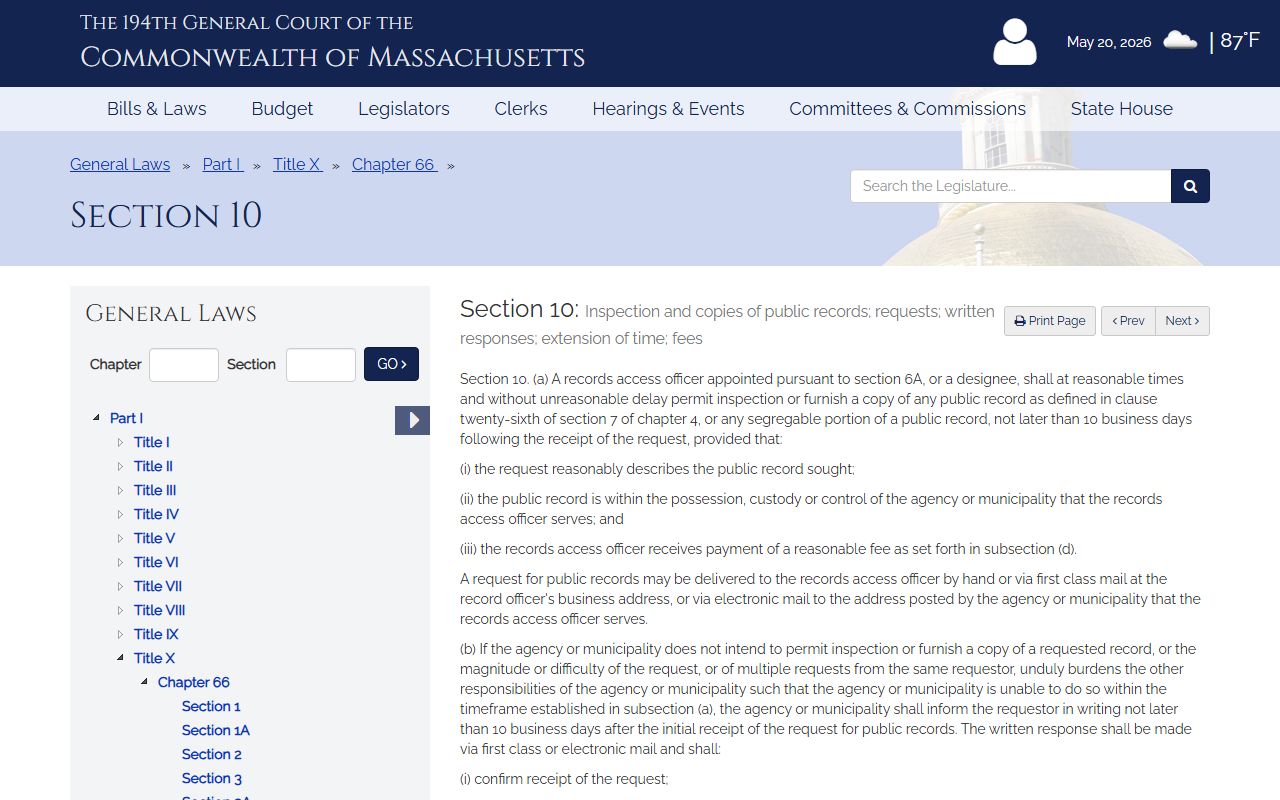
The statute shown above is the starting place for any Suffolk County request to a state or local agency. Fees must be reasonable, and a large request may trigger a written fee estimate before work begins.
Appealing a Records Denial
If an agency denies a request or charges a disputed fee, the requester has a path to appeal. M.G.L. c. 66, § 10A creates the Supervisor of Records review and a superior court enforcement option. The appeal must be timely and well-documented, with the original request, the denial, and the legal basis the agency cited.
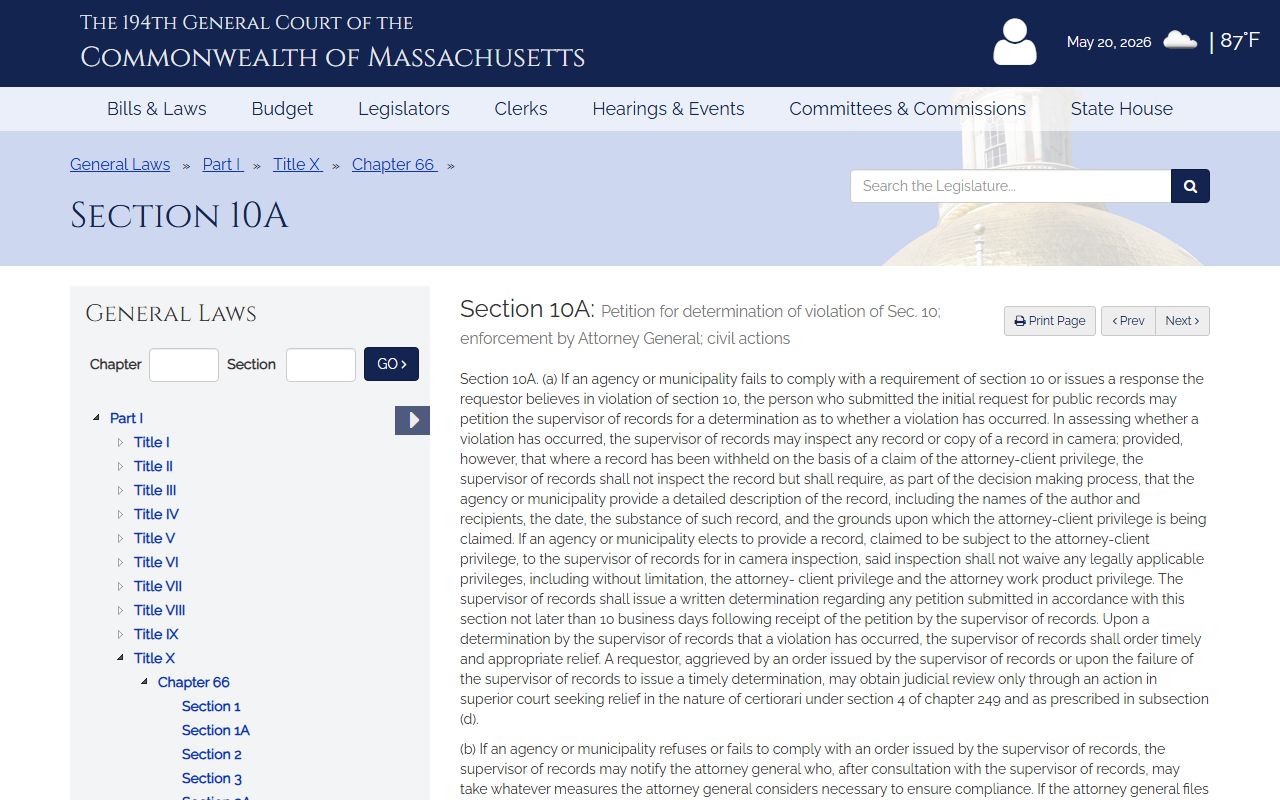
The appeal statute shown above gives the public a real check on agencies that withhold records or charge unreasonable fees. The Secretary of the Commonwealth's Public Records Division handles the Supervisor of Records function.
How to File a Suffolk County Public Records Request
A clear, written request is faster and more reliable than a phone call. The steps below follow the Massachusetts Public Records Law and the practical guidance most agencies follow.
- Identify the right office: agency, court, registry, or city clerk.
- Describe the records in specific terms with a date range.
- Send the request to the records access officer or clerk, in writing.
- Ask for an estimate before agreeing to large search or copy fees.
- If denied, request a written reason citing the legal basis.
- File a Supervisor of Records appeal if needed under M.G.L. c. 66, § 10A.
- Keep copies of the request, the response, and any payment.
Avoid broad "all records" wording. A narrow, specific request is filled faster and at lower cost.
Sheriff Public Records Request Fields
The Suffolk County Sheriff's Department uses a standard public records request format for administrative records. The fields below match the typical agency form. Use them as a template even when an agency has its own version.
| Field | Type | Required | Notes |
|---|---|---|---|
| Requester's name | text | Likely yes | Identity or contact field. |
| Organization | text | Optional | If applicable. |
| Mailing address | text | If mail response | Street, city, state, ZIP. |
| Email address | Yes for electronic response | Used for acknowledgement and production. | |
| Phone | text | Optional | Helps with clarification. |
| Records requested | multiline text | Yes | Describe documents, date range, facility, names, booking numbers. |
| Preferred response method | checkbox | Optional | Email, mail, or inspection. |
| Fee acknowledgement | checkbox | Conditional | Reasonable fees allowed in some cases. |
The Sheriff's site at scsdma.org hosts the public records request page. Inmate-specific records may be restricted under safety, medical, or investigatory rules.
Court Records Are a Different Track
Court case files follow court rules, not the Public Records Law. The central rule is SJC Rule 1:24, which defines case records and limits remote access. A court-record request goes to the clerk or register for the department that heard the case, not to a records access officer. Some records are public for in-person inspection but limited online.
For court-record steps, see Suffolk County court records and court dockets. For an arrest report, the report comes from the police agency that made the arrest, separate from the court file. The arrest records page covers police agencies and how their records differ from court files.
Land and Vital Records
Land records are not court files and not general agency records. They are recorded instruments held by the Suffolk County Registry of Deeds. Use book and page, document number, property address, or party name to search. The Registry of Deeds page explains the process.
Vital records are also separate. Birth, marriage, and death certificates come from the city or town where the event was registered, or from the state vital records system. For Boston records, the City of Boston Registry Division handles requests. The marriage and divorce records page covers marriage and divorce specifically.
Federal Records for Suffolk County Cases
A separate federal track applies to records from federal cases arising in Suffolk County. Federal dockets are not covered by Massachusetts public-records law or by SJC Rule 1:24. They live in the federal court system and are accessed through PACER, the federal docket portal. PACER charges per-page fees with limited fee exemptions. Free alternatives like CourtListener cover some federal opinions but not the whole docket universe.
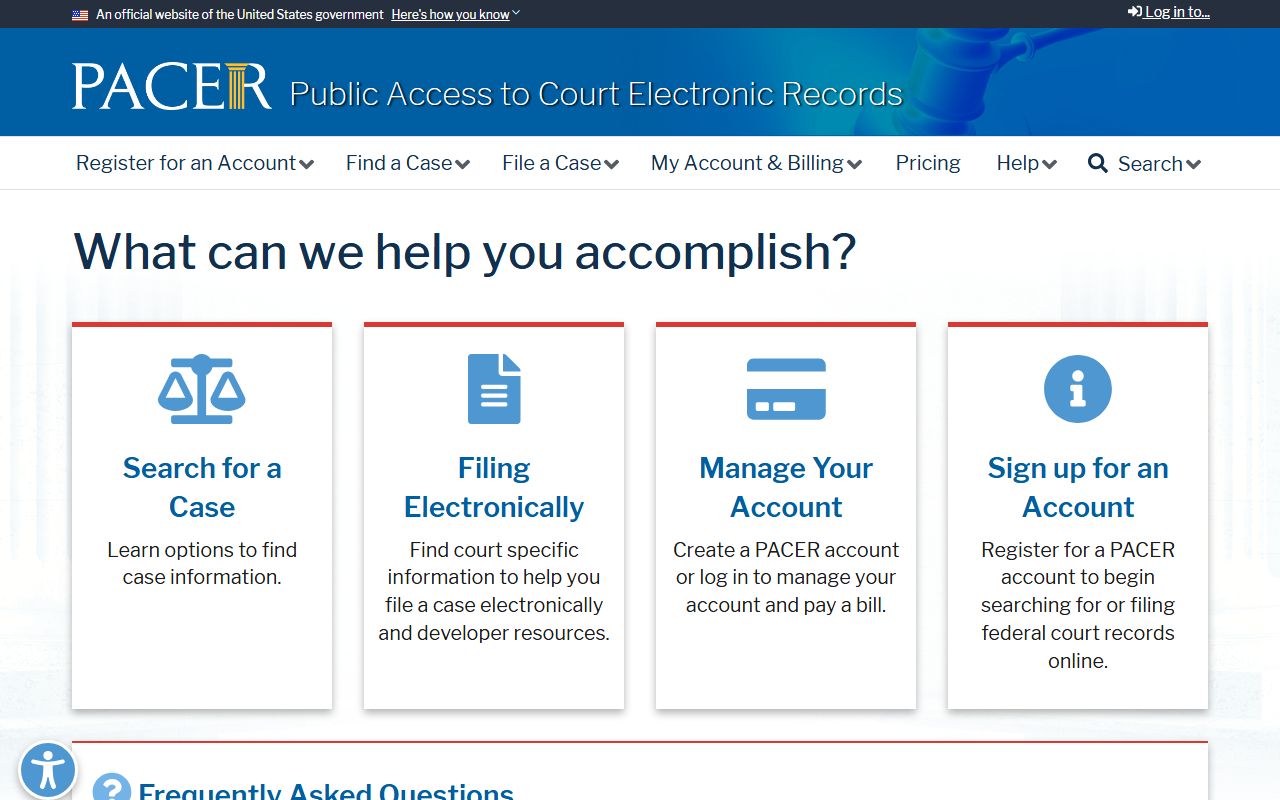
The PACER portal shown above is the official federal docket access system and the right place to start a federal Suffolk records request.
The U.S. Attorney for the District of Massachusetts page above is the federal prosecuting office that handles federal cases out of Suffolk County and publishes press releases about major case outcomes.
Common Suffolk Public Records Mistakes
Most failed Suffolk County public records requests come from a small list of errors. Knowing them in advance saves weeks. The first is sending the request to the wrong office, which forces a redirect. The second is broad wording: a request for "all records" about a topic triggers fee estimates, search delays, and clarification requests. The third is missing the appeal deadline after a denial, which closes the Supervisor of Records path.
To avoid these, name the office on the envelope or email, narrow the request to specific documents and a date range, and calendar any appeal window. If a category is unclear, the records access officer can usually clarify before a formal request goes in. For Sheriff records, the agency contact is on the Sheriff's site. For court records, the clerk for the right department is the contact.
Public Records Fees and Timelines
Fees under the Public Records Law must be reasonable. An agency may charge for search time beyond a first hour, redaction, and copies, with specific limits in the regulations. Each office posts its own fee detail; the table summarizes the categories without inventing exact dollar amounts.
| Item | Fee Note |
|---|---|
| Search time | Allowed beyond a first hour, with limits in the regulations. |
| Copies | Per-page rate set by the agency. |
| Redaction | Reasonable cost to remove exempt material. |
| Electronic delivery | Often lower cost than paper copies. |
| Estimate | Required for large requests before work starts. |
Timelines under the Public Records Law are set by the statute. Court fees follow a different schedule set by Trial Court rules.
Note: Confidential exemptions cover law-enforcement investigatory material, certain personnel data, safety-sensitive information, attorney-client material, and other narrow categories defined by statute.