
What the Massachusetts Land Court Does
The Land Court is a specialized department of the Massachusetts Trial Court. It hears matters tied to real property across the whole state, including Suffolk County. Its jurisdiction covers registered land under the Land Court system, title disputes, tax lien foreclosure, zoning and permit appeals, and certain specialized real estate cases. The court is based in Boston but serves the state.
For Suffolk County property owners, that statewide footprint matters. A title dispute over a Boston, Chelsea, Revere, or Winthrop property may end up in Land Court rather than Superior Court, even when the parties live and the land sits inside Suffolk. The Massachusetts Land Court page is the official department source.
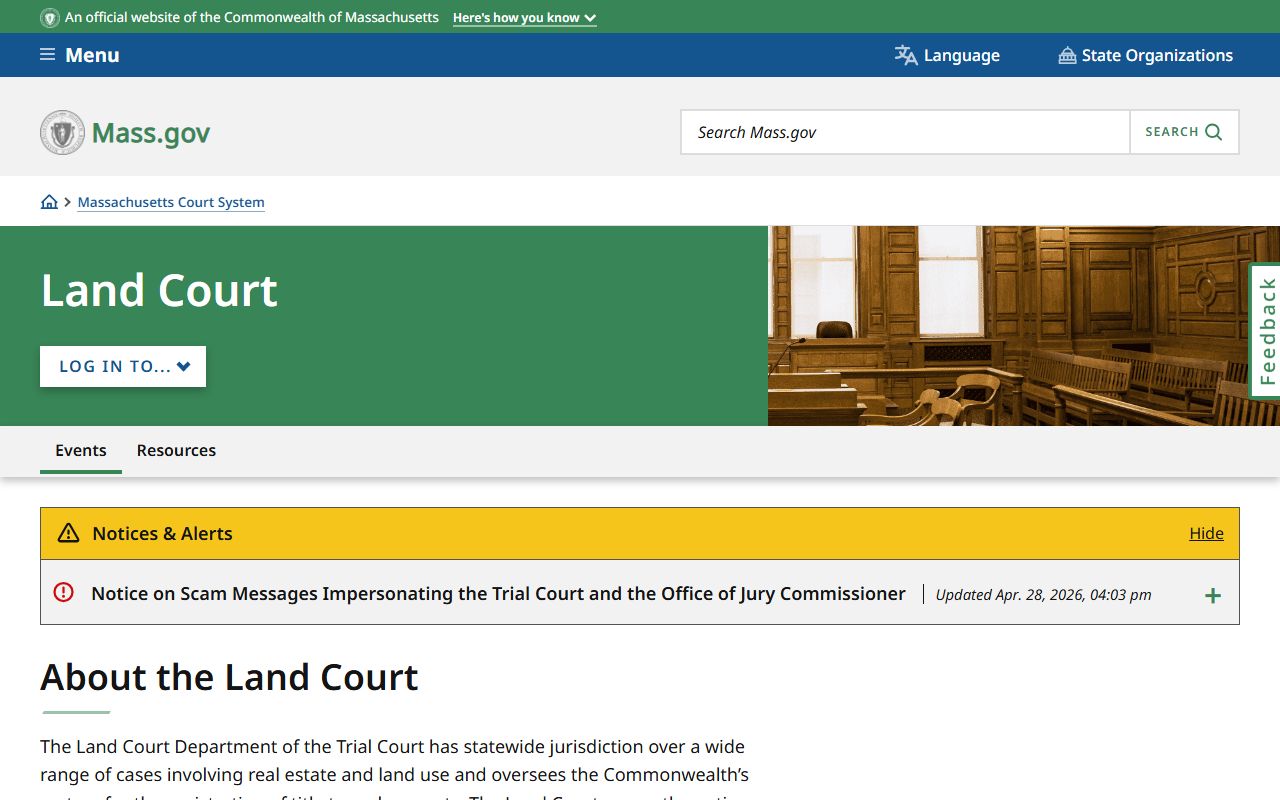
The department page above is the right starting point for Land Court filings, dockets, and rules that apply to Suffolk properties.
Suffolk Cases the Land Court Handles
Not every property-related case is a Land Court case. The court has specific jurisdictional categories, and other property disputes can go to Superior Court or Housing Court. The list below covers the main Land Court case types relevant to Suffolk.
- Registered land matters under the Massachusetts Land Court system.
- Title disputes, including quiet-title and try-title actions.
- Tax lien foreclosure proceedings filed by municipalities.
- Zoning and permit appeals from local zoning board decisions.
- Subdivision and planning appeals where statute provides Land Court review.
- Boundary and easement disputes tied to recorded plans.
- Foreclosure-related actions, including servicemember protections.
For housing-condition or eviction cases, see Housing Court. For ordinary recorded instruments, see Registry of Deeds.
Registered Land in Suffolk County
Massachusetts has two land-recording systems: recorded land, the more common track, and registered land, also called Torrens land. Registered land gets a certificate of title issued through the Land Court system. Suffolk County has both kinds. A search of a registered property may involve Land Court records as well as Registry of Deeds records.
Certificates of title for registered land sit at the registry under a separate index. Transfers, mortgages, and other instruments on registered land are registered rather than recorded, which gives them stronger title-insurance characteristics under state law. Attorneys handling Suffolk closings check whether a property is registered before the closing.
Searching Suffolk Land Court Records
Land Court dockets are searched through MassCourts public eAccess. Pick the Land Court department, then search by case number or party name. Older Land Court files may sit in offline archives, especially for registered-land matters going back decades. If a search comes up empty, call the Land Court clerk with the docket number or approximate filing year.
- Open the MassCourts eAccess portal and pick the Land Court department.
- Enter the case number, or search by party name.
- Open the result row to read the docket.
- Note the case type: registered land, title, tax lien, or zoning.
- Request certified copies from the Land Court clerk.
For broader court-search guidance, see Suffolk County court records. The clerk's official record controls over any online entry, and certified copies still come from the clerk.
Tax Lien Foreclosure
Tax lien foreclosure is a common Land Court matter for Suffolk properties. When a municipality files a tax lien and follows the statutory process, Land Court is the court that handles the foreclosure side of the case. The case can affect title and a property owner's ability to sell or refinance.
Owners facing a tax lien should respond quickly. The court file, not the assessor's records, is the place to confirm what has been filed. Legal aid programs and the Boston Court Service Center can help self-represented owners understand the process. Boston, Chelsea, Revere, and Winthrop all use the statutory tax-title and foreclosure path, so the case mechanics are the same across the four Suffolk municipalities even when the local treasurer or collector is different.
Zoning and Permit Appeals
Zoning board decisions in Boston, Chelsea, Revere, and Winthrop can be appealed under Massachusetts law. Some appeals are heard in Land Court, others in Superior Court, depending on the statute and the kind of decision. The Land Court is the more common venue for permit and variance appeals tied to local boards.
Strict deadlines apply. A missed deadline can end the appeal before it starts. Anyone planning a zoning appeal in Suffolk should consult counsel and confirm the deadline against the statute and the local board's notice. The Boston Zoning Board of Appeal and the planning bodies in Chelsea, Revere, and Winthrop each have their own notice rules tied to the appeal clock.
Land Court vs. Superior Court vs. Registry
Three offices share parts of the Suffolk land-records picture, and they do different things. The comparison below shows how they line up.
| Office | Holds | Best For |
|---|---|---|
| Land Court | Registered land, title, tax lien, zoning appeals | Court cases that affect title |
| Superior Court | Large civil real estate disputes | Damages and complex claims |
| Registry of Deeds | Recorded deeds, mortgages, plans, liens | Instrument lookup and recording |
For Superior Court cases, see the Superior Court page. For deeds and mortgages, see Registry of Deeds.
How a Land Court Case Moves
A Land Court case generally starts with a complaint or petition filed in the court. The court issues a citation or order of notice depending on the case type, with strict timelines for service. Parties file answers and motions, the court schedules conferences and hearings, and many cases end in a judgment or decree that can be recorded with the Registry of Deeds for title purposes.
Some Land Court matters are decided on paper. Others go to a bench trial. Land Court does not use juries the way Superior Court does for many civil cases, which is one reason litigation about title and zoning often moves more quickly there than in a Superior Court case. The court also handles servicemember protections under the federal Servicemembers Civil Relief Act in foreclosure-related actions, which Suffolk lenders and borrowers may encounter.
Certified Land Court Copies
Certified copies of Land Court orders, decrees, and judgments come from the Land Court clerk. To order one, have the docket number, the case name, and the specific document ready. Many real estate transactions need a certified copy of a Land Court order to close.
Fees follow the Trial Court schedule. The clerk can confirm the current amount and the accepted form of payment. Indigency waivers may apply for those who qualify.
Note: A Land Court judgment can affect title, so confirm any pending or recent Land Court action before closing on a Suffolk property.